Case study · product design + engineering

trackmyprop
A desktop-first workspace for traders managing the operational complexity of prop-firm accounts.
- Role
- Product direction, UX/UI design, implementation
- Product
- Electron desktop application
- Audience
- Prop-firm and futures traders
- Current state
- Private beta, in active development
The product
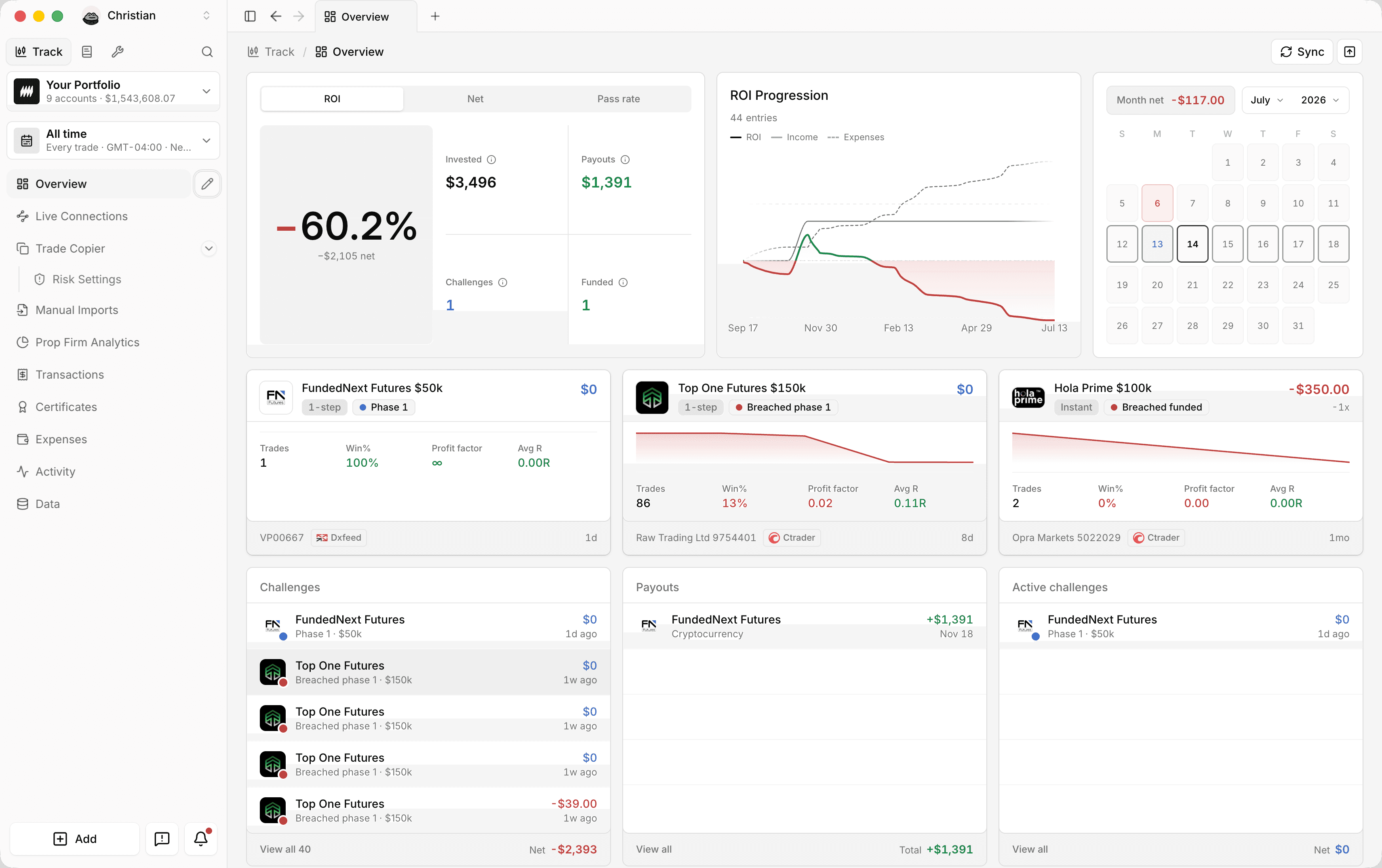
trackmyprop is a desktop workspace for traders who operate across prop firms, accounts, platforms, rules, and payout cycles. It brings account tracking, trade journaling, challenge management, trading tools, and operational records into one place.
I lead the product direction, user experience, interface design, and implementation of trackmyprop. I use AI agents throughout research, development, testing, and iteration while retaining responsibility for the decisions and final quality.
The problem
Prop-firm traders do more than place trades. They monitor different account states, follow firm-specific rules, review executions, track fees and payouts, and keep evidence of their progress. That work is often split across broker platforms, spreadsheets, notes, calculators, and community support conversations.
The design challenge is to make that complexity visible without making the product feel complicated: enough density for serious desktop work, with clear hierarchy and language that remains understandable under pressure.
Domain knowledge as a design input
I came to the product as both a futures trader and someone who had worked directly with prop-firm traders through community, support, affiliate, and growth roles. Those conversations exposed recurring friction: unclear rule calculations, fragmented account history, repetitive support questions, and poor visibility into what needs attention next.
That experience informs the product vocabulary, information architecture, safety language, and the decision to treat accounts, challenges, trades, payouts, and costs as connected parts of one workflow rather than isolated dashboards.
Product structure
- Track
- Portfolio overview, live connections, accounts, prop-firm journeys, transactions, expenses, and account records.
- Journal
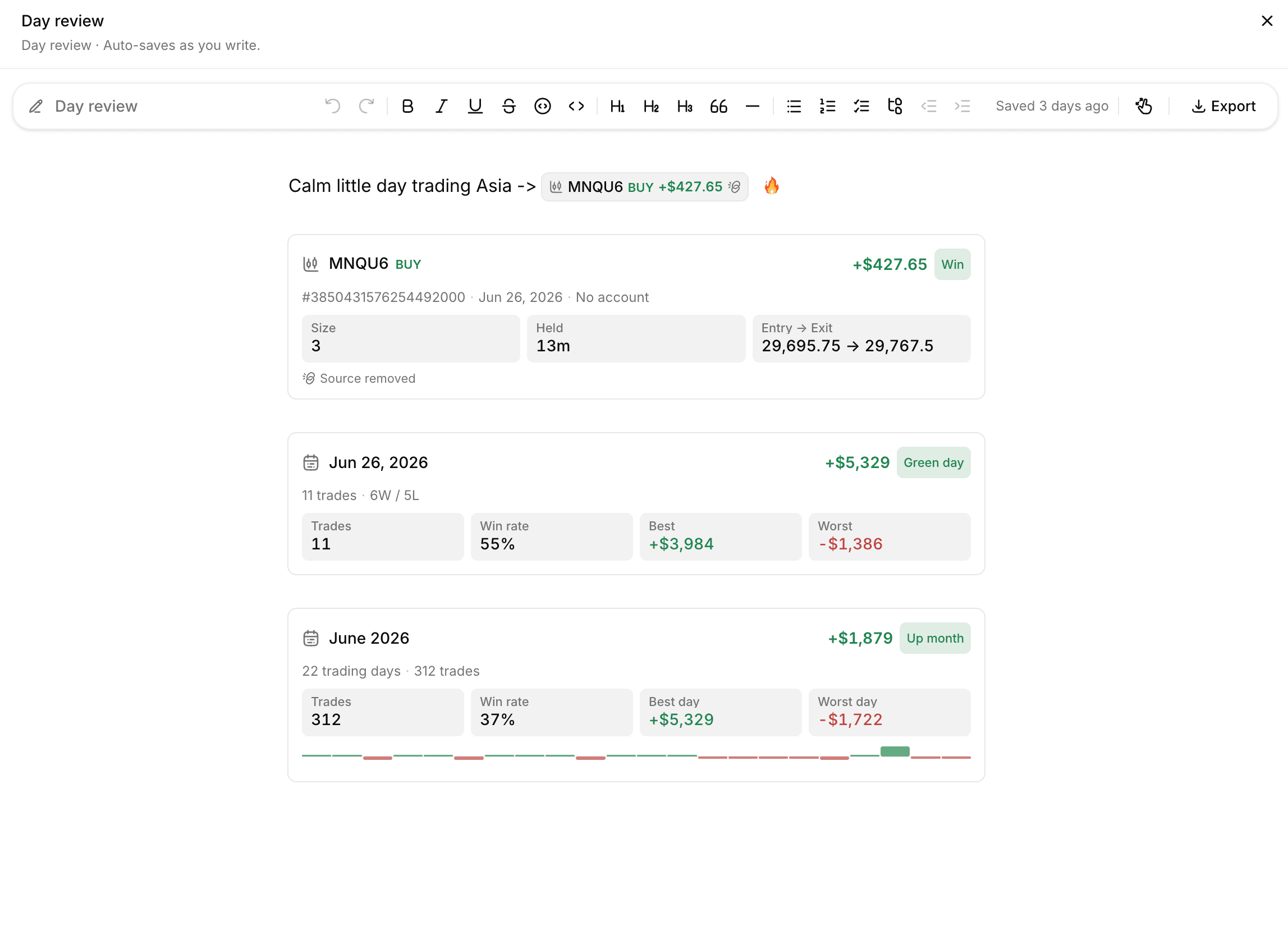
- Trade history and review tools that connect individual executions to daily and longer-term context.
- Tools
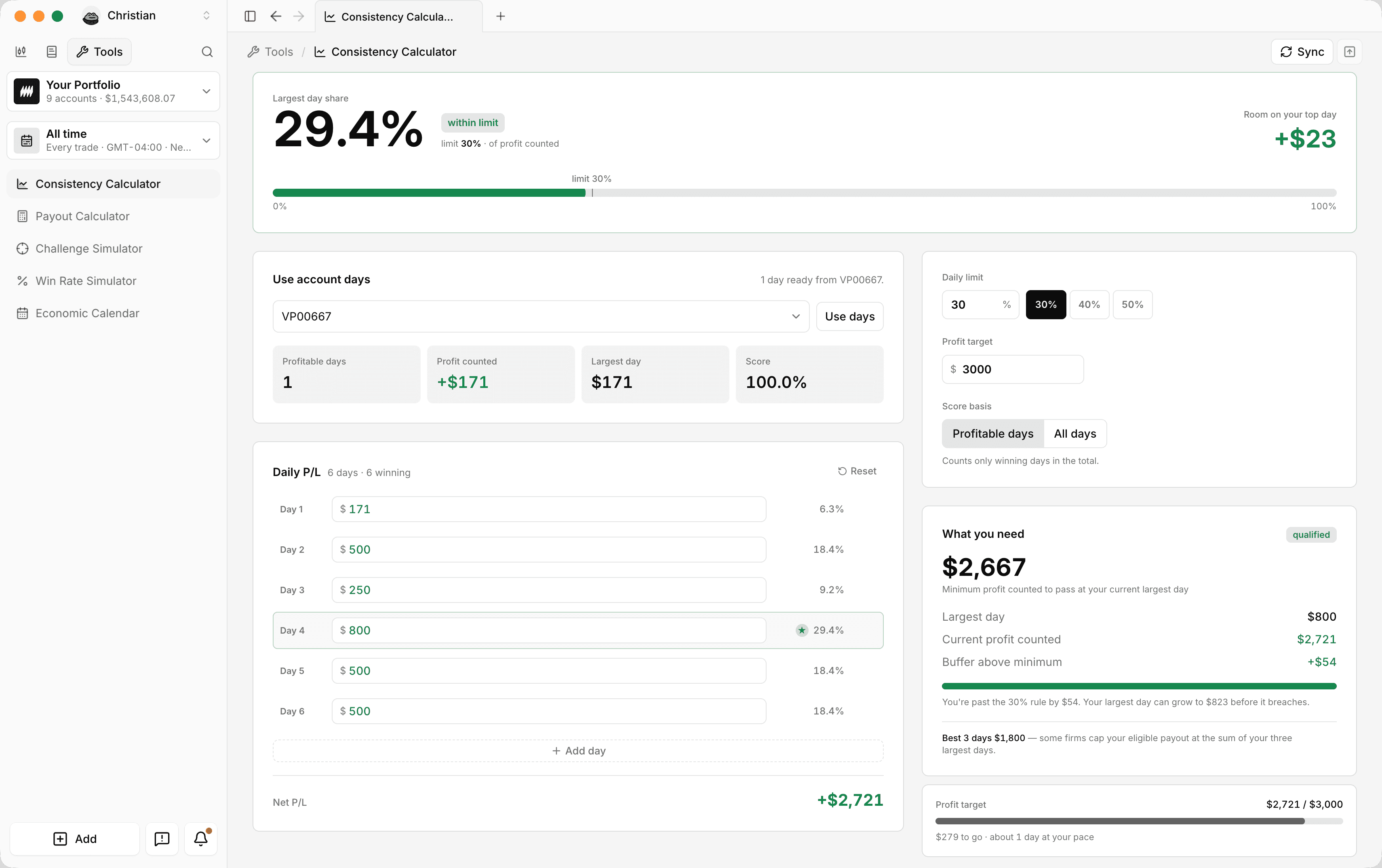
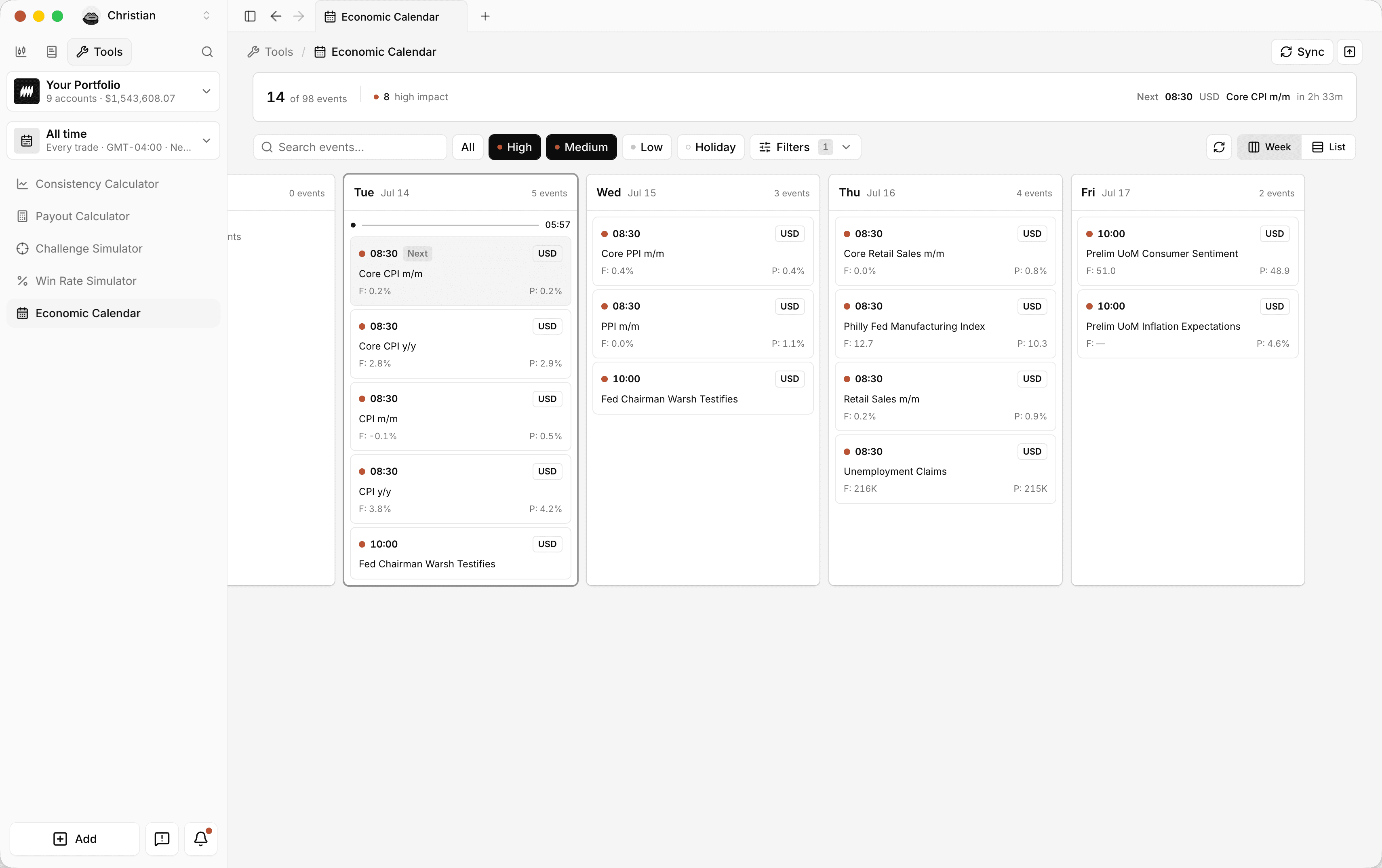
- Consistency, payout, challenge, and win-rate calculators alongside an economic calendar.
- System
- Desktop navigation, search, reusable data surfaces, shared actions, and connection status patterns.
Important interface decisions
- Desktop density with a stable hierarchyPersistent navigation, page tabs, filters, and compact data surfaces support repeated daily use without turning every metric into a promotional card.
- Rules explained as decisionsCalculators pair the result with the inputs, thresholds, and next required amount so traders can understand why a status changed.
- One language across workflowsReusable account rows, status treatments, monetary formatting, dialogs, and page actions keep unfamiliar tools predictable.
- Safety before optimistic automationConnection and trading states use explicit status and failure language; unavailable information is not presented as a guarantee.
Desktop-first by design
trackmyprop is built as an Electron desktop application for macOS and Windows. That choice supports wide, information-dense layouts, keyboard-led navigation, local workflows, and a persistent workspace that can sit beside trading software throughout the day.
The trade-off is deliberate: the core product is not compressed into a mobile dashboard. The public website, account surfaces, and supporting brand materials handle the web-facing part of the product while the main operational experience remains desktop-first.
Design system and implementation
The interface is built with React, TypeScript, Tailwind CSS, and reusable primitives backed by accessible component foundations. Shared tokens separate the page, card, sidebar, overlay, and state layers; reusable patterns cover controls, dialogs, data rows, navigation, status feedback, and responsive marketing surfaces.
The product website and brand system use the same restrained visual language: neutral surfaces, compact typography, practical motion, and screenshots that show the actual application rather than a separate marketing fiction.
AI in the workflow
I use AI agents to accelerate research, implementation, testing, and iteration while retaining ownership of the product direction, design decisions, and final quality. The repository includes the working rules, product context, review practices, and verification steps those agents use.
AI is useful here because the product spans interface design, desktop engineering, broker integrations, documentation, and quality assurance. It increases execution capacity; it does not replace the judgment needed to decide what belongs in the product or whether the result is good enough.
Constraints and trade-offs
- Different prop firms and broker platforms expose different rules, data, and connection limits.
- Dense financial interfaces need precision without making every surface visually loud.
- Live or unavailable states must be communicated honestly, especially around trading and account safety.
- A private-beta product needs room to evolve without making the navigation and component system feel temporary.
Current state and lessons
trackmyprop is in private beta and active development. The current desktop product covers portfolio and account tracking, prop-firm journeys, trade journaling, calculations, records, an economic calendar, and trade-copier workflows, with connection coverage and supporting systems continuing to evolve.
The central lesson has been that domain knowledge matters most when it becomes product structure: clearer terminology, safer defaults, connected records, and explanations that help a trader decide what to do next.
See the product or discuss a project
Visit the trackmyprop product site, or get in touch about design engineering for a trading or fintech team.